If you’ve ever looked at a freshly dusted shelf a day later and wondered, “Why is my house so dusty?” you’re not alone. Dust has a way of coming back no matter how often you clean, but once you know where it’s coming from, it gets a lot easier to keep under control.
Why Household Dust Deserves Attention
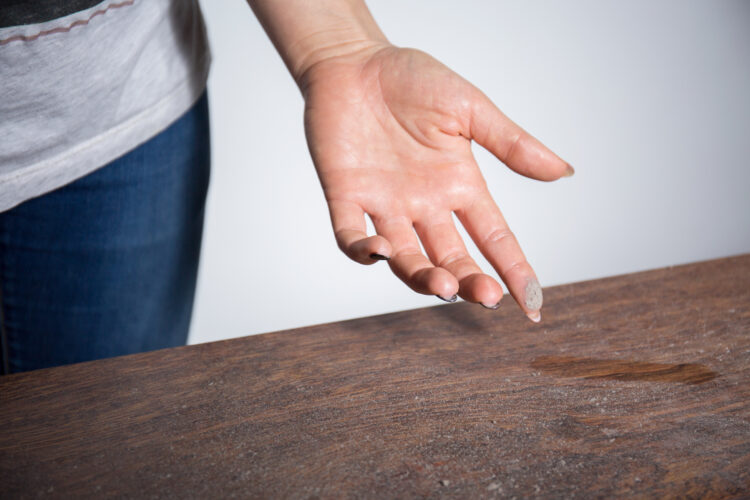
Most of us think of household dust as a cosmetic problem—something to wipe away before company arrives. But it’s more than that…and pretty unpleasant actually. Dust is a mix of fibers, tracked-in dirt, pollen, pet dander, and bits of dust mites. It settles on every surface, and the finer particles float around in the air we breathe all day.
A good vacuum used regularly is the backbone of keeping dust under control, and it’s the one habit I’d never skip. But vacuuming alone can’t fix problems like a leaky air duct, high humidity, or a doormat that isn’t doing its job.
In this article, we’ll take a look at why some houses stay dusty even with regular cleaning, and the habits that make the biggest difference. You’ll never get rid of dust completely (I’ve accepted that), but you can get it to a much more manageable level.
Why Is My House So Dusty? The Most Common Causes
Where household dust comes from
Dust comes into your home from a lot of directions at once. Dirt gets tracked in on shoes. Pollen drifts in through open doors and windows. Pets shed fur and dander. Carpets, couches, and blankets shed fibers. And dust mites leave behind particles that build up in bedrooms and anywhere with lots of fabric.
Why some homes get dustier than others
Two houses next door to each other can have very different dust levels. The number of people and pets, the type of flooring, how much upholstered furniture you have, your climate, and how often you clean all play a part.
It also helps to know there are two kinds of dust. Settled dust is the layer you see on shelves and tables. Airborne particles are smaller and stay floating much longer. You need different approaches for each, which is why wiping surfaces alone never seems to be enough.
Hidden reasons your house stays dusty
If you clean and still find yourself asking why your house is so dusty a day or two later, the cause is often something you can’t see.
- Your HVAC filter isn’t doing its job. A filter that’s overdue for a change, the wrong size, or not sitting snugly in its slot lets air (and dust) slip around it instead of through it.
- Leaky return ducts. Gaps in ductwork running through an attic, crawlspace, or garage can pull in dusty, unfiltered air and blow it into every room.
- Dry indoor air. Low humidity creates static, which makes dust cling to surfaces and electronics and keeps fine particles floating longer.
- Humid indoor air. On the flip side, damp air helps dust mites thrive, especially in bedding and carpet.
- Your dryer. A full lint trap or a loose or kinked dryer vent can send lint back into the house.
- Recent projects. Sanding drywall, remodeling, or even bringing home a new rug or couch (new fabrics shed for a while) can bump up dust for weeks.
- Pollen season. Open windows, plus pollen on clothes, hair, and pets, add up fast in spring.
What Has Helped Most in My House
Keeping dust down is an ongoing battle, not something you fix once and forget about. But a few things have made a real difference for us.
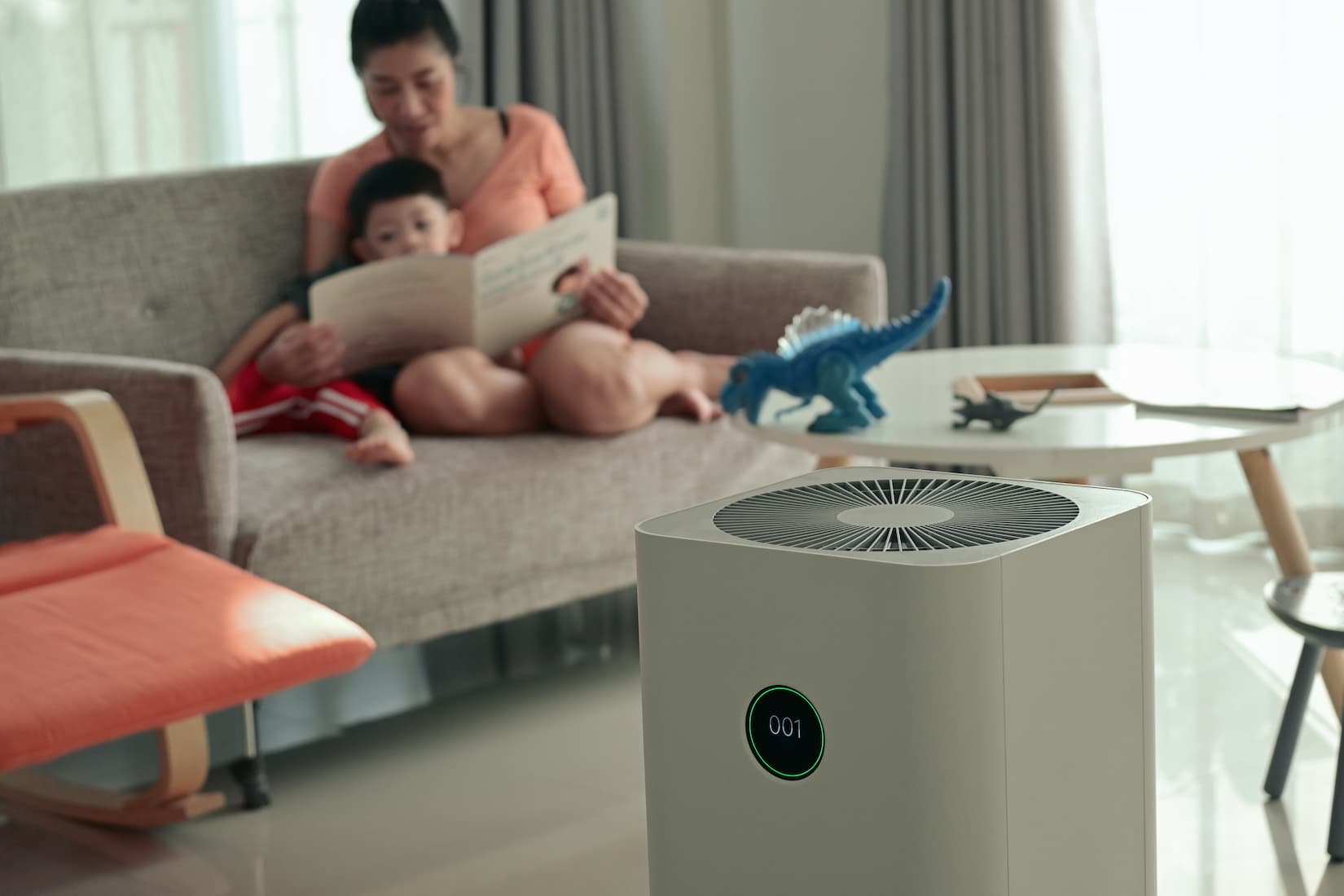
Running an air purifier has helped more than I expected, especially in the rooms we spend the most time in. Vacuuming regularly, not just when the floors look dirty, keeps dust from building up in carpets and rugs where it gets kicked back into the air. And I’ve gotten pickier about the stuff I keep out in the open. Things like knickknacks on open shelves, piles of throw pillows, and faux flowers or plants are dust magnets. The fewer of those I have, the less dusting I have to do.
Start by Keeping Dust Out
It’s a lot easier to stop dust at the door than to chase it around the house later. A few simple habits help:
- Put a good doormat at every entrance (one outside and one inside is even better).
- Leave shoes by the door.
- Cut back on clutter and dust collectors in spots that are hard to clean.
The takeaway: Every bit of dirt that stays on the doormat is dirt you don’t have to vacuum up later.
If you have pets, their fur and dander are a big part of the dust picture too. Brushing them regularly and washing their bedding helps a lot. There are more tips for reducing pet hair in your home here.
Clean in a Way That Actually Captures Dust
Vacuum regularly. In my experience, this is the most important habit. Vacuum carpets, rugs, and upholstery on a regular schedule, and more often in high-traffic areas and homes with pets. Don’t forget along baseboards, under furniture, around air vents, and in corners where dust tends to collect.
Work from top to bottom. Dust shelves, ledges, and blinds first and do floors last, so anything you knock loose lands on a spot you haven’t cleaned yet.
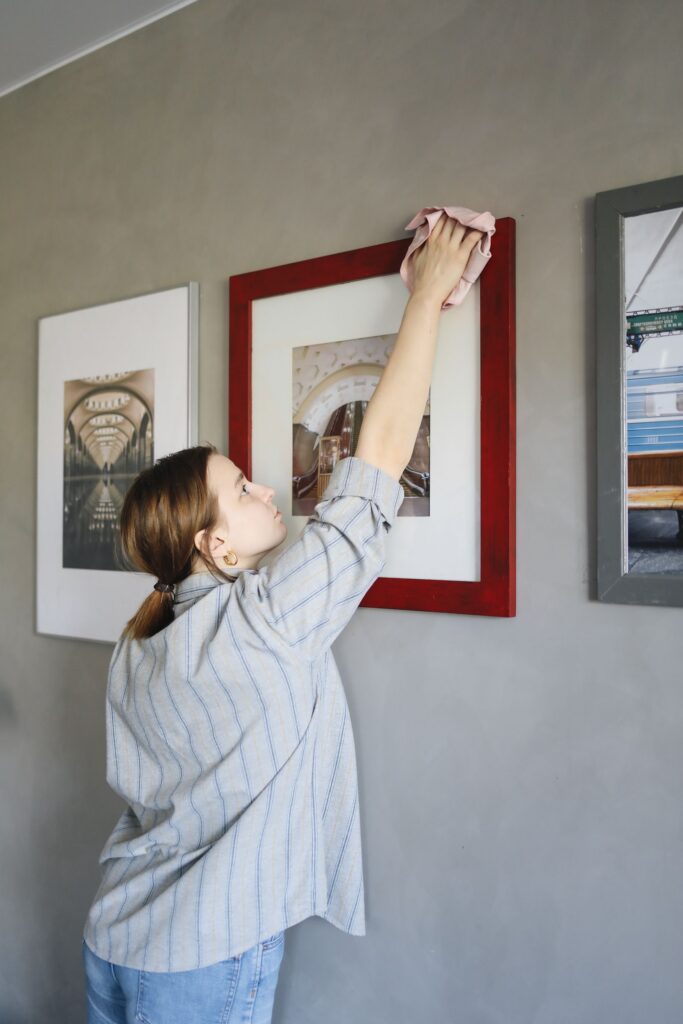
Use a damp cloth instead of a dry one. A slightly damp microfiber cloth picks dust up. Dry dusting and sweeping tend to push it back into the air, where it just settles again later. Damp mopping works well on most hard floors, but check your flooring’s care instructions first.
Don’t skip soft surfaces. Curtains, couch cushions, throw blankets, and mattresses all hold onto dust. Vacuum them with an upholstery attachment, and wash what you can. Check care labels first.
How often you clean depends on your household. Pets, kids, allergies, and how much foot traffic you get all make a difference, so there’s no one schedule that works for everyone.
Reduce Dust Mites and Allergens in Bedrooms
Bedrooms are where dust mites like to settle in, thanks to all the bedding, pillows, mattresses, carpet, and stuffed animals. A few things help:
- Wash sheets and pillowcases regularly in the hottest water the fabric care label allows.
- Use allergen-resistant mattress and pillow covers if anyone in your house is sensitive to dust mites.
- Cut back on extra throw pillows, decorative blankets, and stuffed animals, or choose ones you can toss in the washer.
- Keep an eye on humidity, since dust mites love damp air.
If someone in your family has allergies or asthma and symptoms keep hanging on, talk to your doctor. A cleaner house helps, but it isn’t a replacement for medical care.
Air Purifiers, Filters, and Ventilation
Air purifiers. This is the one I’d add to the list if you only try one new thing. A portable air purifier with a true HEPA filter pulls dust, pollen, and pet dander out of the air in the room it’s sized for. Check the room size on the box before you buy, and factor in the cost of replacement filters, since that’s an ongoing expense. Keep in mind that a purifier only cleans the air. It won’t remove dust that has already settled on your furniture, so you still need to vacuum and dust.
HVAC filters. Change your furnace and AC filters on the schedule the manufacturer recommends, and make sure you’re buying the right size. A filter that doesn’t fit snugly lets dusty air go right around it.
Fresh air. Opening windows can help air out the house when the weather and outdoor air are good. During heavy pollen days, though, it can bring in more than it lets out.
The EPA’s indoor air quality site has helpful, no-nonsense information on indoor air and ventilation if you want to dig deeper.

A Simple Dust-Reduction Routine
- As needed: Clean up spills and tracked-in dirt right away, and keep entryways clear. If you have pets or little ones, you’ll probably be doing this a lot.
- Weekly: Vacuum floors and upholstery, wash bedding, wipe surfaces with a damp cloth, and check under furniture.
- Seasonally: Check your HVAC filter, look for leaks or mold, clean out the dryer vent, and tackle hard-to-reach spots like ceiling fans and tops of cabinets.
Common Mistakes to Avoid
- Only dry dusting
- Cleaning the floors but ignoring bedding and soft surfaces
- Letting HVAC filters go too long between changes
- Ignoring leaks or moisture problems
- Doing a big dusting session right before someone with allergies comes over
Adjusting for Your Home
- Pet owners: Use washable covers on furniture and pet beds, and clean their favorite spots often.
- Carpeted homes: Vacuum often, especially along edges and in high-traffic areas.
- Small apartments: Focus on the entryway, and pick tools that can do more than one job.
- Allergy-sensitive households: Dust when the sensitive person isn’t home if possible, and talk to a doctor about ongoing symptoms.
- Humid climates: Stay on top of ventilation and fix leaks fast.
- Dry climates: Keep indoor air from getting too dry to cut down on static and floating dust.
Frequently Asked Questions
Does running the HVAC fan help reduce dust?
Switching your thermostat fan from “auto” to “on” sends more air through your filter, so it can catch more airborne dust. It also uses more electricity, and in humid areas it can make moisture control harder. Try it for a few weeks and see if you notice a difference.
Do air purifiers reduce dust?
Yes, for dust in the air. A purifier with a true HEPA filter that’s sized for your room can cut down on airborne dust, pollen, and dander. It won’t clean dust that’s already settled, so it works best alongside regular vacuuming and dusting.
Why is my house so dusty even after I clean?
Some dust is always settling, so a little buildup is normal. But if surfaces look dusty again within a day, check the hidden causes above, starting with your HVAC filter, ductwork, and entryways.
Should I get my air ducts cleaned?
Not necessarily. The EPA says duct cleaning isn’t something most homes need routinely. It may be worth it if you see mold, signs of pests, or a lot of dust and debris coming out of the vents.
The Bottom Line
Dust is never going to disappear for good. But once you know where it’s coming from, you can focus on what works: keep it out at the door, vacuum regularly, dust with a damp cloth, cut back on dust collectors, and let an air purifier and a good HVAC filter handle the air. A routine you can actually keep up will do more than any one gadget or a once-a-year deep clean.
Also read:
Pet Hair Everywhere? 12 Solutions That Actually Work
How to Choose the Right Air Purifier for Your Family: A Budget-Friendly Guide
Air Filters, Upholstery, and Other Smart Changes for a Healthy Home
Look for MomsWhoSave on Pinterest, Facebook, Instagram, and Twitter.
Don’t miss a thing! Subscribe to MomsWhoSave’s newsletter.
Leave a Reply