Last updated on December 7th, 2025
Your small home can feel twice as big without spending a fortune. These 12 smart tricks will help you create the illusion of more space—no renovations required.

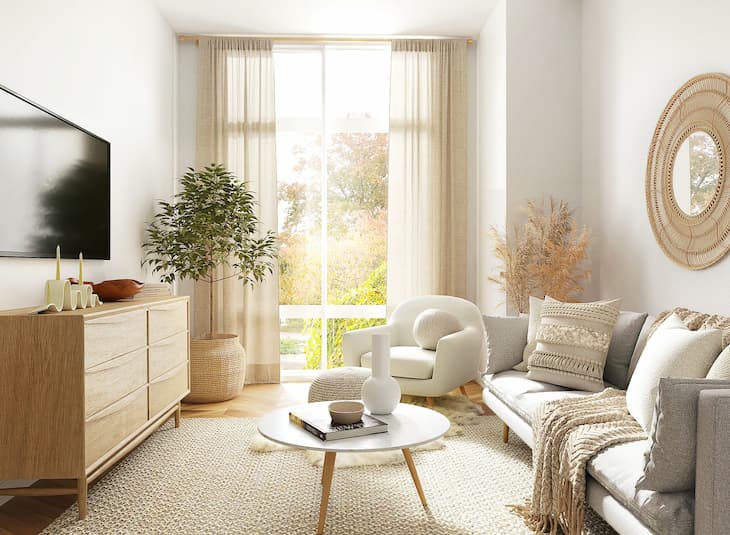
Living in a small home doesn’t mean sacrificing comfort or style. The secret to making limited square footage feel bigger is all about perception—how light, layout, and organization work together to create openness. Even the tiniest apartment can feel airy and inviting without breaking the bank or tearing down walls.
Strategic choices about mirrors, color, and furniture placement can completely transform how a space feels. These intentional adjustments make everyday living more enjoyable while maximizing every inch you have.

Harness Light and Color
1. Choose light, reflective colors. Soft tones like cream, light gray, and pale blue bounce light around and push walls visually outward. Dark colors absorb light and make spaces feel cramped, while lighter shades open things up considerably. A single gallon of paint is a terrific (and affordable) way to transform an entire room.
2. Maximize natural light. Keep window treatments minimal with sheer curtains or simple blinds that maintain privacy without blocking the light. Sunlight is free and instantly makes rooms feel larger and more welcoming.
3. Place mirrors strategically. Position mirrors directly across from windows to double the light flow and create the illusion of depth. This simple trick amplifies both natural and artificial light throughout your space.
4. Upgrade your lighting. Layer different light sources at various heights. Warm white bulbs create coziness for evenings, while cool-toned LEDs make rooms appear cleaner and more spacious during the day. Experiment by switching out just two or three bulbs in your main living areas to see the difference.

Arrange Furniture Strategically
5. Keep walkways clear. Position furniture away from main traffic paths. When you can move easily through a room, it automatically feels more open and functional.
6. Choose low-profile pieces. Look for sofas and chairs with lower backs and exposed legs. This is an easy way to create visual flow and makes ceilings appear higher.
7. Invest in glass or acrylic furniture. Transparent materials like glass coffee tables or acrylic chairs take up physical space without blocking sightlines, making your space feel more airy. Acrylic dining chairs start around $50-80 each, while glass coffee tables range from $100-200—affordable investments that make a dramatic visual difference.
Maximize Storage and Function
8. Declutter ruthlessly. The more items visible on surfaces, the smaller your space appears. Keep only what you love and use regularly. Try the six-month rule: if you haven’t used it in half a year, donate or sell it. That extra cash can fund other home improvements.
Try This Tonight
Clear one surface completely—your kitchen counter, coffee table, or dresser top. Move everything off and put back only the absolute essentials. Notice how much more open and breathable the room feels instantly. That’s the power of decluttering, and it costs you nothing but a few minutes of your time.
9. Use multifunctional furniture. Look for storage ottomans that double as seating. Folding dining tables that expand when needed can be tucked away when not in use. Lift-top coffee tables hide remotes and magazines while providing a workspace.
10. Maximize vertical space. Install shelving above doors, in corners, and along wall space that typically goes unused. Wall-mounted cabinets and floating shelves keep floors clear while providing storage.
Bonus tip: If your closets are overflowing with seasonal items, holiday decorations, or sentimental belongings you don’t want to part with, consider renting a storage unit. This can free up valuable space while allowing you to have access to your belongings when you need them.
Create Visual Depth
11. Layer textures thoughtfully. Combine different materials like a woven rug with smooth curtains, or a velvet pillow against linen upholstery. Texture adds dimension without taking up physical room, making spaces feel more sophisticated and less flat.
12. Use strategic contrast. Place darker furniture or an accent wall against lighter surroundings to add definition and draw the eye through the space. Try one navy accent wall in a cream room, or a charcoal sofa against pale gray walls—the contrast makes both colors pop and gives your eye places to rest, which paradoxically makes the room feel larger.
Make Rooms Work Harder
In smaller homes, rooms often pull double duty—especially for families juggling multiple needs in limited square footage. Your bedroom might include a workspace, or your dining area might also be your crafting zone. The key is combining comfort with practicality.
Create distinct zones within one room using area rugs or curtains to visually separate different functions. A rug defines the living area, while a compact desk in the corner becomes your office. This flexible approach lets your home adapt to your lifestyle instead of forcing you to compromise.
Common mistakes to avoid: Cramming in too much furniture, mixing too many competing colors, or skipping regular decluttering sessions will sabotage even the smartest layouts. Edit your belongings seasonally—swap winter gear for summer items every six months. Stick to a cohesive color palette (choose 3-4 main colors maximum) for the most spacious, pulled-together feel.
Small Spaces, Big Possibilities
A small home offers distinct advantages—warmth, simplicity, lower utility bills, and easier maintenance that larger spaces can’t match. Less square footage means less to clean, heat, and cool. When every corner serves a purpose, small homes aren’t just functional—they’re downright cozy.
The tips we’ve discussed all work together to transform perception. Light colors expand visual boundaries. Mirrors multiply brightness. Smart furniture choices maintain flow. Hidden storage eliminates clutter. The result? A home that feels open, calm, and perfectly suited to how you actually live—no expensive renovations required.
Also read:
7 Benefits of Decluttering Your Home
The Best Calming Colors to Create a Cozy Home
How to Select Lighting for Each Room of Your Home: 4 Important Tips
You can find MomsWhoSave on Facebook, Instagram, Pinterest, and Twitter. Join us for updates.
Don’t miss a thing! Subscribe to MomsWhoSave’s newsletter.
Leave a Reply