Last updated on September 13th, 2026
Every online baby registry makes it sound like you need a nursery full of gear before baby even arrives. But moms who’ve lived through it will tell you: what actually gets used is far simpler — and cheaper — than any checklist makes it seem.
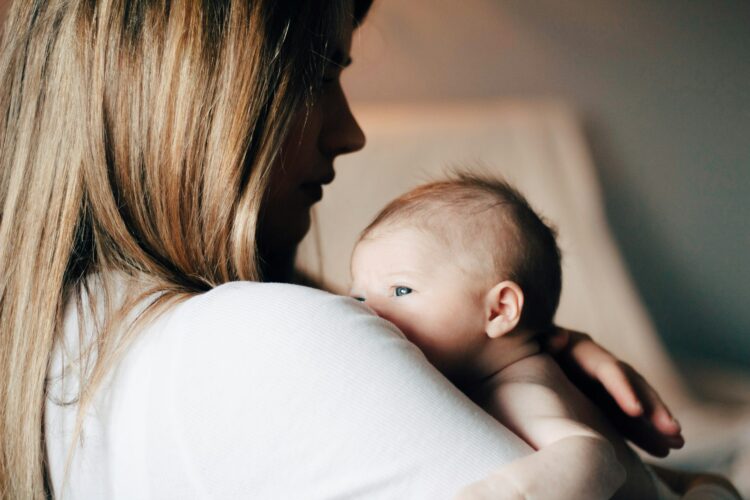
When you’re preparing to welcome a newborn into your home, don’t be duped into thinking you need a 150-item registry, a fully decorated nursery, and several versions of every baby product. The truth is much simpler, and cheaper. This is your guide to newborn basics on a budget — the small group of essentials real parents use again and again during the first few weeks.
I can still clearly remember that when my kids were babies, it was the diaper cream, swaddle blankets, burp cloths, and the bulb syringe that got used again and again. That’s usually how it goes. The “must-haves” in those first sleep-deprived weeks are rarely the flashiest items on the registry — they’re the small things you reach for without thinking twice.
The trick is to start with what you genuinely need, learn what works for your baby, and add other items if you need them later. So, let’s get started with our list of practical, budget-friendly newborn basics organized by category.
Getting ready to leave the hospital
You only need a few things to take your baby home. These two essentials, plus diapers, of course, will usually cover the journey.
Infant car seat
A properly installed infant car seat is non-negotiable for traveling home by car and is legally required in every state. Budget-friendly seats approved for sale must meet the same applicable federal safety standards as premium models, so focus on correct installation and suitability for a newborn rather than luxury fabrics or extra features. The National Highway Traffic Safety Administration (NHTSA) offers free car seat inspections through certified technicians if you want a second set of eyes on your install before heading home.
One going-home outfit
Pack one comfortable, weather-appropriate outfit. A simple sleeper or bodysuit with pants is usually enough. There’s no need to buy several special outfits for a journey that may only last a few minutes.
Sleep
Newborn sleep products can quickly take over a registry, but a safe-sleep setup is actually pretty straightforward.
A safe sleep space
Choose either a crib or a bassinet, depending on what you already own and what fits your home. You don’t have to have both immediately. The American Academy of Pediatrics (AAP) recommends a firm, flat sleep surface without loose bedding, pillows, bumpers, and toys to reduce the risk of SIDS.
Two or three fitted sheets
A couple of fitted sheets make overnight changes easier without taking up too much space. Check that they fit the mattress snugly and don’t bunch up.
A basic sound machine
A budget sound machine can help mask household noise and create a consistent bedtime routine. A simple model with continuous white noise is enough; app connectivity and decorative lighting are optional.
Feeding
Your feeding needs will depend on whether you breastfeed, formula-feed, pump, or do a combination of both. Skip buying large quantities before you know what works for you and your baby.
Inexpensive burp cloths
You’ll probably use more burp cloths than you expect. Basic cotton cloths, muslin squares, or clean cloth diapers work well and are often cheaper than specially marketed burp cloth sets.
A few bottles
Start with one or two bottles from one or two brands rather than buying a large sampler or complete feeding system. Babies can have strong preferences, so test a few before committing to a full set.
A nursing or feeding pillow
A simple feeding pillow will give you much-needed arm and back support during long feeding sessions. A basic version with a washable cover does the job just as well as a pricier one loaded with extra pockets and adjustment settings.
A couple of pacifiers
Buy two or three pacifiers in different shapes or materials. Some babies refuse them entirely, while others strongly prefer one style. Wait until you know what your baby likes before buying more. If you’re breastfeeding, the AAP recommends waiting until breastfeeding is well established, generally around three to four weeks, before introducing a pacifier.
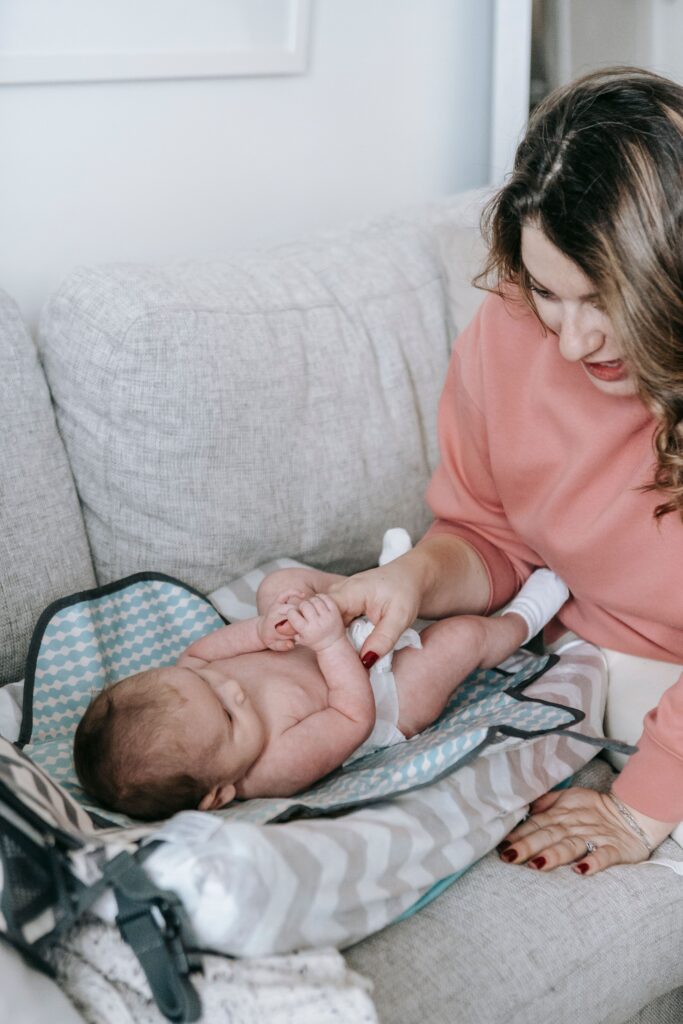
Diapering
A practical changing setup can be created without a dedicated changing table or expensive storage system.
Diapers and wipes
Begin with smaller packages until you know which size and brand you prefer. Once you have a favorite, buying the next size up in bulk can save money and prevent you from being left with too many newborn-size diapers.
A simple changing pad
A wipe-clean changing mat or basic padded changing mat works on the floor, a bed, or a sturdy dresser. A full changing table isn’t needed, especially in a smaller home.
Diaper cream
Keep one basic barrier cream nearby for redness and irritation. A small tube is enough to begin with until you find a favorite brand.
Clothing and laundry
Newborns grow quickly, and some are too big for newborn sizes sooner than expected. Keep the first wardrobe small and practical.
Basic sleepers and onesies
Choose a small collection of soft sleepers and bodysuits in newborn and 0–3-month sizes. Zippers or simple snaps make frequent diaper changes easier. Around five to seven everyday outfits is generally a more practical starting point than a drawer full of tiny clothes.
Swaddle blankets
Lightweight swaddle blankets can also serve as burp cloths, stroller covers, or clean surfaces for floor time. Don’t go overboard, but buy enough to keep you from running out between laundry days.
Fragrance-free detergent
A regular fragrance-free detergent is a practical and affordable choice. You don’t necessarily need an expensive “baby” detergent. Just because it’s marketed for babies, doesn’t necessarily mean it’s any better or even much different than a good fragrance-free option.
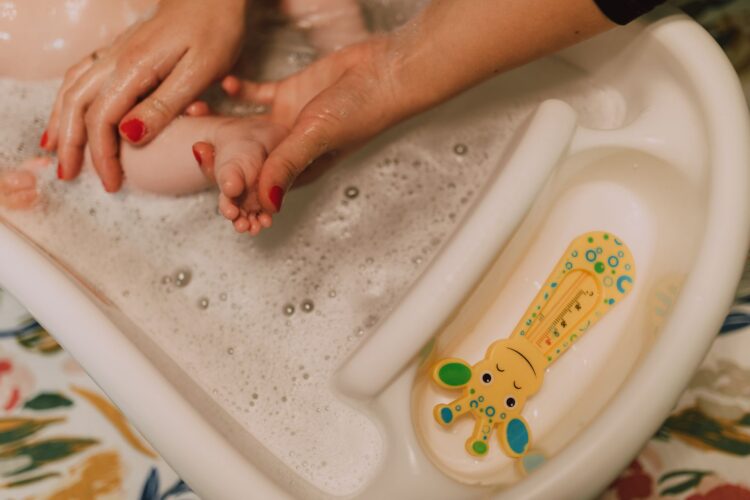
Bath time
Newborns don’t need elaborate bath products or a bathroom full of accessories. One thing worth knowing before your first bath at home: the American Academy of Pediatrics recommends sponge baths only until your baby’s umbilical cord stump falls off and heals, which typically takes one to two weeks. A tub bath comes after that.
A simple infant tub or insert
A basic baby bath or newborn bath insert provides support and makes washing baby easier. Choose an option that fits your sink or bathtub and is simple to dry and store.
Soft washcloths
Four soft washcloths are usually enough to start. Ordinary soft cotton cloths can work just as well as premium baby bath sets.
Gentle, fragrance-free soap
Start with one mild, fragrance-free baby wash. Newborns only need a small amount, so there’s no reason to purchase a complete collection of shampoos, lotions, oils, and bubble baths.
Basic health and safety
A small home-care kit can help you manage common newborn needs without buying a large preassembled grooming set.
Digital thermometer
A reliable digital thermometer is something you’ll need to have on hand. Choose an easy-to-use model, and follow your healthcare provider’s guidance on how to take your newborn’s temperature.
Nail clippers or baby nail file
Newborn nails can be surprisingly sharp. Basic baby nail clippers are inexpensive, while an emery board or baby nail file might feel easier to control during the first few weeks.
Saline drops and a bulb syringe
Saline drops and a simple bulb syringe can help clear a stuffy little nose. These are inexpensive, compact, and often work better than complicated nasal-cleaning gadgets.
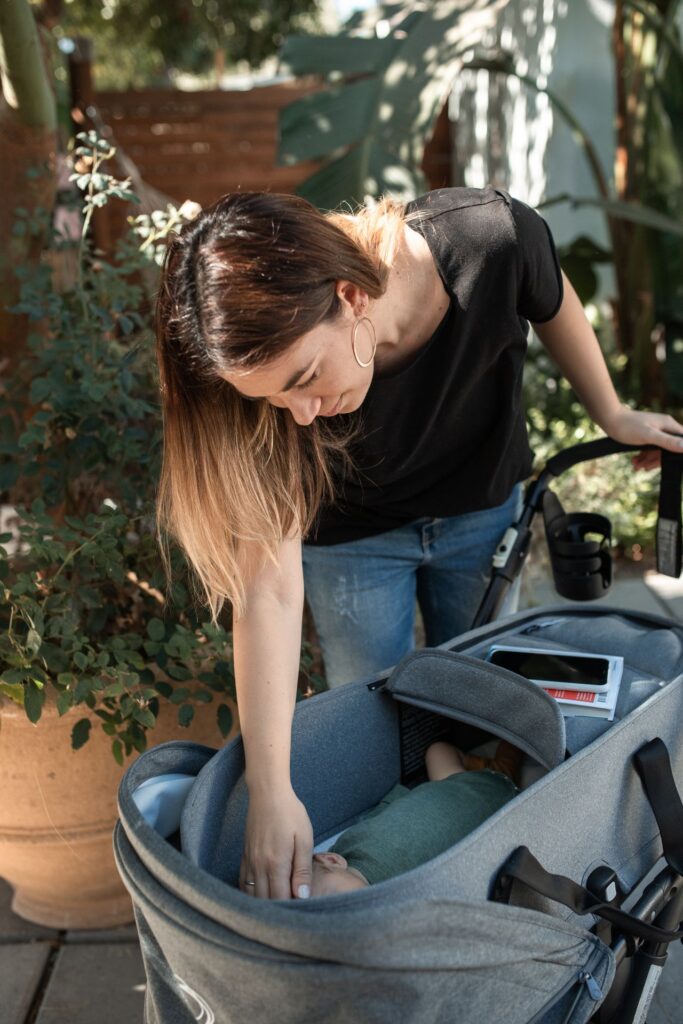
Getting out of the house
Leaving home with a newborn does not require a complete travel system and multiple bags of equipment.
A newborn-safe baby carrier
A carrier designed and approved for newborn use can become one of the most-used items during the early weeks. It keeps your baby close while leaving your hands free, which is useful for short walks, household tasks, appointments, and quick errands.
There are a couple of options when it comes to baby carriers for newborns. A baby wrap can provide a soft, close fit during the newborn stage, while a basic structured model may be easier to use as your baby gets a little bigger. Whichever style you choose, check the manufacturer’s weight guidelines and instructions. Your baby’s face should remain visible, their airway unobstructed, and their body properly supported.
A basic stroller
A simple stroller is useful for longer walks and outings. Focus on safe newborn compatibility, easy steering, and a fold you can manage one-handed rather than something bulky and complicated to use.
A tote or simple diaper bag
You don’t need a specialized bag with dozens of compartments. A washable backpack, or even a tote you already own, can hold diapers, wipes, a spare outfit, feeding supplies, and a small changing mat.
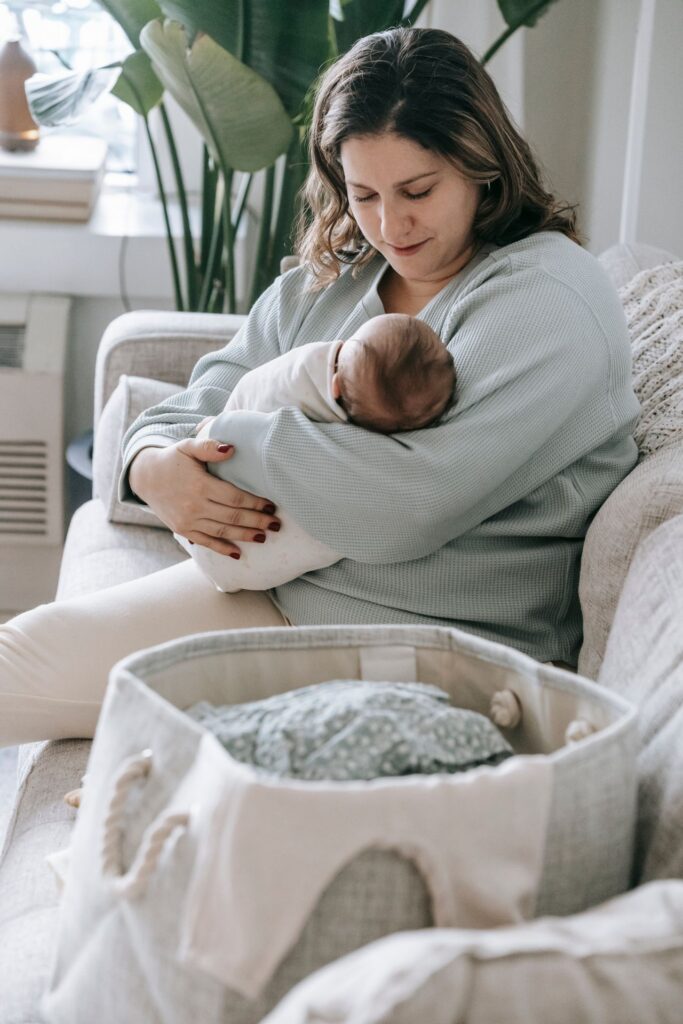
Mom’s own postpartum needs
Newborn checklists often focus entirely on the baby, but the recovering mother needs practical support too.
Comfortable recovery wear
Choose loose clothing, supportive underwear, soft pajamas, or nursing-friendly tops that are comfortable and easy to wash. Function matters more than building a separate postpartum wardrobe.
Basic perineal care supplies
Depending on your delivery and recovery, useful supplies may include absorbent pads, disposable underwear, a peri bottle, and any products recommended by your healthcare team. Hospitals sometimes provide several of these items, so ask what you will receive before shopping.
A water bottle with a straw
A large bottle with a straw or one-handed lid makes it easier to stay hydrated while feeding or holding your baby. A bottle you already own is perfectly fine.
Easy snacks
Keep filling, grab-and-go foods within reach. Granola bars, crackers, fruit, nuts, sandwiches, or pre-portioned snacks can make the first long days and nights much easier.
Start small and add what works
This list is intentionally shorter than most newborn checklists. You don’t need to predict every preference your baby will have before they arrive — just the newborn basics on a budget that get you through those first few weeks.
Start with a safe place to sleep, a car seat, basic feeding and diapering supplies, a few outfits, simple health items, and essentials for your own recovery. Then pay attention to what your family actually uses.
You can always buy more bottles once you know which nipple your baby prefers, add clothes as they grow, or invest in another piece of gear when a genuine need arises. Starting small saves money, reduces clutter, and gives you the freedom to choose products based on real experience rather than registry pressure.
Looking back, the items that got me through those foggy first weeks weren’t the ones I’d spent the most time researching before baby arrived — they were the handful of basics I could reach for without thinking. Give yourself permission to keep it simple. You’ll figure out the rest as you go, and that’s exactly how it should work.
Are you a parent? Let us know what your list of newborn basics on a budget looks like.
Also read:
11 Must-Have Baby Items to Make New-Parent Life Easier
Types of Baby Rash & How to Treat & Prevent Them: Your New Mom Guide
You can also find MomsWhoSave on Pinterest, Facebook, Instagram, and Twitter. Join us for updates.
Don’t miss a thing! Subscribe to MomsWhoSave’s newsletter.
Leave a Reply