Last updated on September 25th, 2026

When you leave a home you’ve lived in for years, it’s about more than packing boxes and forwarding your mail. Letting go of your old home can be emotional, even when the move is one you’ve been looking forward to.
I know this firsthand. I’ve moved cross-country a few times: from the Midwest to Arizona, back to the Midwest, and finally to North Carolina. I was excited about each of those moves, but none of them were easy. Here’s why leaving a home can be so hard, plus some things that actually help.
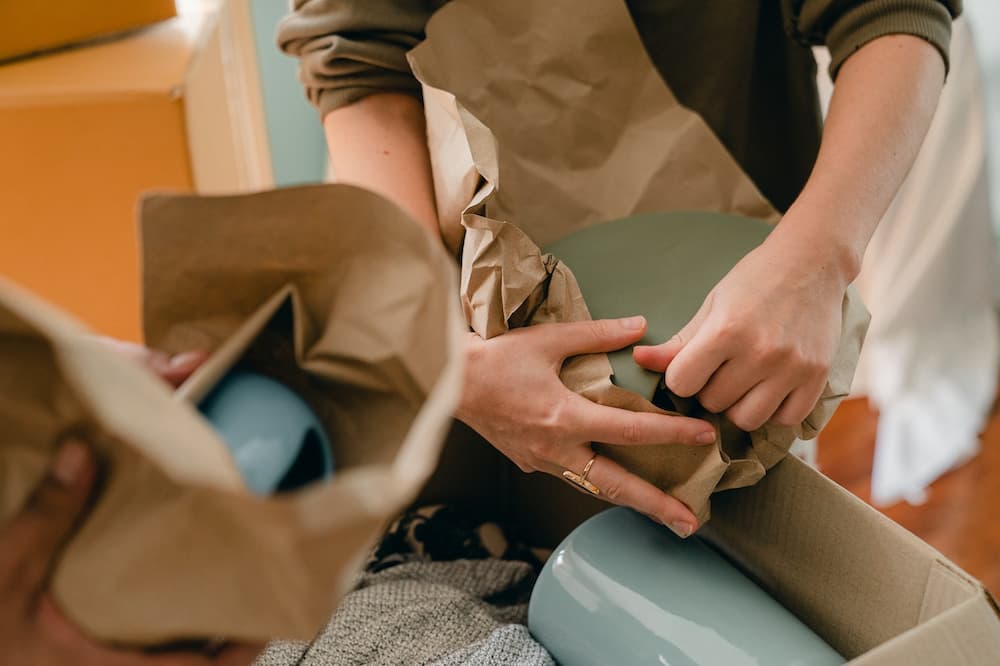
Why Letting Go of Your Old Home Can Feel So Difficult
Moving to a new house is a bit more complicated than simply changing your address. Over the years, a home collects things you can’t pack in a box: your morning routine, the corner where you like to read, the spot in the backyard where you played catch with your kids. You often don’t notice those things until the cabinets are empty and the photos come down off the walls. That’s when it hits you.
If moving feels overwhelming, there’s a reason. The Holmes-Rahe Life Stress Inventory, a scale developed by psychiatrists Thomas Holmes and Richard Rahe in 1967 and still widely used today, lists a change in residence as a stressful life event on its own. A big move rarely comes by itself, either. It often brings a change in living conditions, new schools for the kids, a new job or work schedule, and a new social circle, and each of those adds to the total.
A big move may also feel bigger because most of us don’t do it very often anymore. That might surprise you, since it can seem like everyone is relocating these days, but Americans actually move far less than previous generations did. In 1985, about 20% of Americans moved in a given year, according to the U.S. Census Bureau. By 2021, that number had dropped to 8.4%, the lowest rate recorded in more than 70 years.
Researchers point to several reasons: an aging population, more two-income households where both jobs have to line up before anyone can move, rising housing costs, and remote work that lets people change jobs without changing addresses. Whatever the reasons, it means that for a lot of families today, a major move is a rare event without much experience to fall back on.
You Can Be Happy and Sad at the Same Time
The sadness doesn’t always line up with how you feel about the move itself. Someone who’s dreamed for years of a bigger house or a better neighborhood can feel just as much grief as someone who’s moving because they have to. Any big change comes with some loss, even a change you wanted.
Even the Holmes-Rahe scale counts happy milestones like marriage and outstanding personal achievements as stressful. Good change is still change.
Knowing that won’t make the feelings disappear, but it can take away some of the guilt. Feeling sad doesn’t mean you made the wrong decision. You can be excited about where you’re going and still miss what you’re leaving behind.

Give Yourself Time to Say Goodbye
Moving schedules fill up fast. One week you’re signing papers, and the next you’re living out of boxes. If you can, build a little extra time into your timeline. It’s not for the logistics. It’s so you have some time to work through the emotions of moving.
Saying goodbye to your home doesn’t have to be a big production. A few simple ideas:
- Take photos and a quick video walkthrough before you start packing, while the house still looks like your home.
- If you’ve tracked your kids’ growth on a door frame, take a photo or copy the marks onto a strip of paper or a board you can hang in your new place.
- Have one last meal there. Order pizza and eat it on the floor with family or close friends after the furniture is gone.
- Do a final walk-through of each room on your last day before you lock the door.
There’s no right way to do this, and a few minutes is often enough. Just try not to skip it entirely because the schedule got tight.
Help Your Kids Say Goodbye
Kids experience a move differently than adults do, and they usually have less say in the decision. Give them a role in the goodbye. Let them choose a favorite spot to photograph, write a note to leave for the new family, or pack a special box they get to open first at the new house.
During the chaos of a move, keep routines like bedtime and family dinners as steady as you can. For younger kids especially, familiar routines can make this big change feel safer.
Focus on What You’re Gaining
When things get hard, it’s easy to lose sight of why you decided to move in the first place. Maybe it’s a new job, a growing family that needs more space, being closer to relatives, or wanting a fresh start somewhere new. Whatever your reasons are, write them down. Keep the list on your phone or tape it inside a kitchen cabinet.
You’ll be glad you did on the rough days, when a box goes missing, the truck runs late, or the couch won’t fit through the new front door. Those problems feel huge in the moment, but they’re temporary. The life you’re building in your new home will last a lot longer than the moving-week headaches.
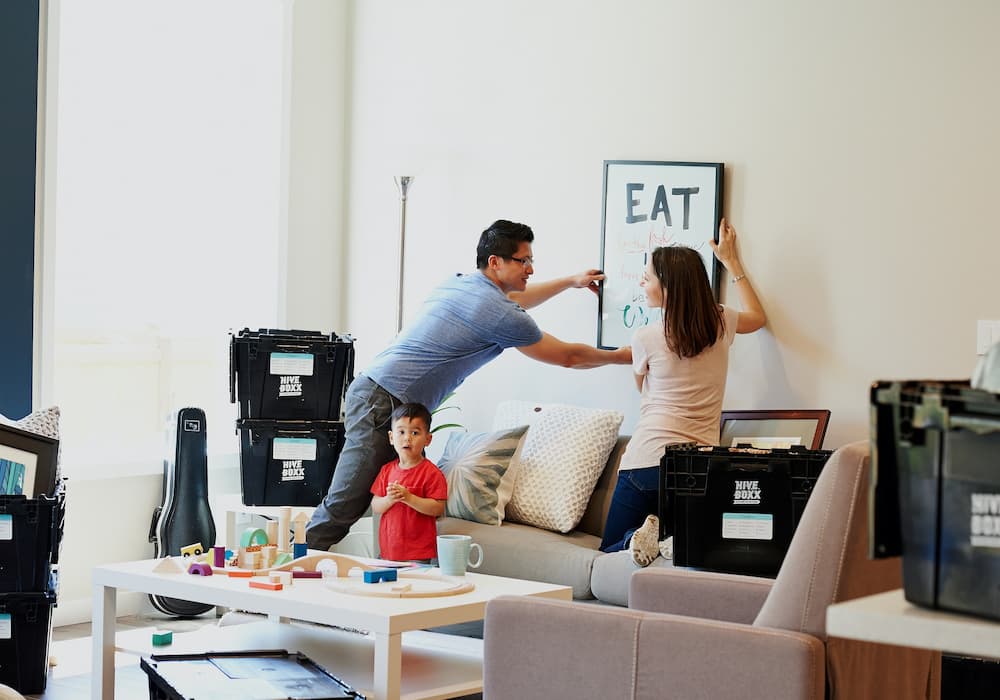
Bring Familiar Things Into Your New Home
You don’t have to start from scratch. Along with the people and pets you love, it’s your own things that make a new place feel like home: a painting that’s hung in your living room for years, a piece of furniture with a story behind it, a plant you’ve kept alive through a few seasons.
A lot of people put off settling in until every box is unpacked, and they end up living in clutter for weeks. Try the opposite. Before you tackle the garage or the junk drawer, hang a few favorite pictures, make the beds with your usual sheets, and put out your favorite throw blanket.
A first-night moving essentials box packed with the basics makes this much easier. Having familiar things around you early can be the difference between a house that feels like home in a week and one that doesn’t, even months later.
Start New Routines Right Away
Part of what you miss about your old home is the routine that went with it: your grocery store, your favorite coffee spot, your usual morning walking route. Start building new ones as soon as you can. Find the closest park, try the local pizza place, and take the same walk around the neighborhood a few days in a row.
Everyday habits help a new place stop feeling like somewhere you’re just visiting.
When the Sadness Sticks Around
Feeling homesick for a few weeks, or even a few months, is normal. It usually fades as new routines take hold. If the sadness doesn’t let up, or it starts affecting your sleep, appetite, work, or relationships, talk with your doctor or a mental health professional. A big move can stir up more than you expect, and you don’t have to push through that on your own.
Letting Go Doesn’t Mean Forgetting
After three cross-country moves, I can tell you that each one came with some sadness, even the ones I couldn’t wait to make. Missing your old place is part of the process, and letting go of your old home takes time, so be patient with yourself.
What I’ve also learned is that the unsettled feeling doesn’t last. For a while, the new house doesn’t really feel like yours yet. Then, before you know it, you have a favorite grocery store, a go-to takeout spot, and a shortcut that avoids the traffic. You start finding places you never would have discovered if you hadn’t moved.
The memories from your old house come with you, along with the people, pets, and things that made it special. And one day you’ll pull into your driveway and realize the new place feels like home, too.
Also read:
Starting Over in a New City? 9 Tips to Make it a Success
Moving Essentials Box: What to Pack for Your First Night in Your New Home
You can also find MomsWhoSave on Pinterest, Facebook, Instagram, and Twitter. Join us for updates.
Don’t miss a thing! Subscribe to MomsWhoSave’s newsletter.
Leave a Reply