Disclosure: Articles may contain affiliate links, which means we may earn a commission (at no additional cost to you) if you make a purchase through these links. As an Amazon Associate, we earn from qualifying purchases. See our full disclosure here.
Last updated on September 21st, 2026
Looking for screen-free weekend ideas the whole family will enjoy? Here are some simple, budget-friendly ways to unplug and spend real time together.

It’s surprisingly easy for a weekend to disappear behind a screen. One person is watching a show. Someone else is playing a game. A parent is answering work emails. Before you know it, Sunday evening arrives, and everyone has spent most of the weekend in the same house without really spending much time together.
Let’s not let that happen.
I remember when my own sons first got into video games. It was way too easy to let an afternoon slip by while they were locked into a game and I was catching up on my own things, telling myself we would spend time together later. Looking back, I wish I had pulled them away from the screen more often while I still could.
If you’re in that stage now, you know exactly what I mean.
Time with our kids is precious, and it goes by faster than any of us are ready for. The weekends we get with them are limited, and too many of those weekends can slip away one episode, one level, one notification at a time without anyone really noticing.
So what can we do to get everyone off their screens and actually spend time together, in a way that feels fun rather than forced?
You don’t have to ban every device or fill every minute with activities. Start with just putting the phones away for a while, skipping the streaming services, and giving everyone a chance to do something different. It can be as simple as cooking breakfast together or heading out for a walk.
Here are some more ideas that can make a screen-free weekend one that everyone will actually enjoy — with real time together, not just time in the same house.

Go Somewhere You Can Explore
A screen-free weekend is totally possible, and it doesn’t mean making an elaborate plan or spending a lot of money.
Start simple: just get out of the house.
Visit a local park, nature trail, botanical garden, or nearby lake. Let the kids decide where to go if you have several options. They’re more likely to enjoy the outing when they have a say in the plan.
You can make a simple game out of the walk, too. See who can spot the most squirrels or birds. Look for unusual leaves or flowers. Count how many different types of trees you can find.
There’s no need to turn the walk into a fitness challenge. Take your time. Stop when something catches your attention. That’s when the best conversations happen.
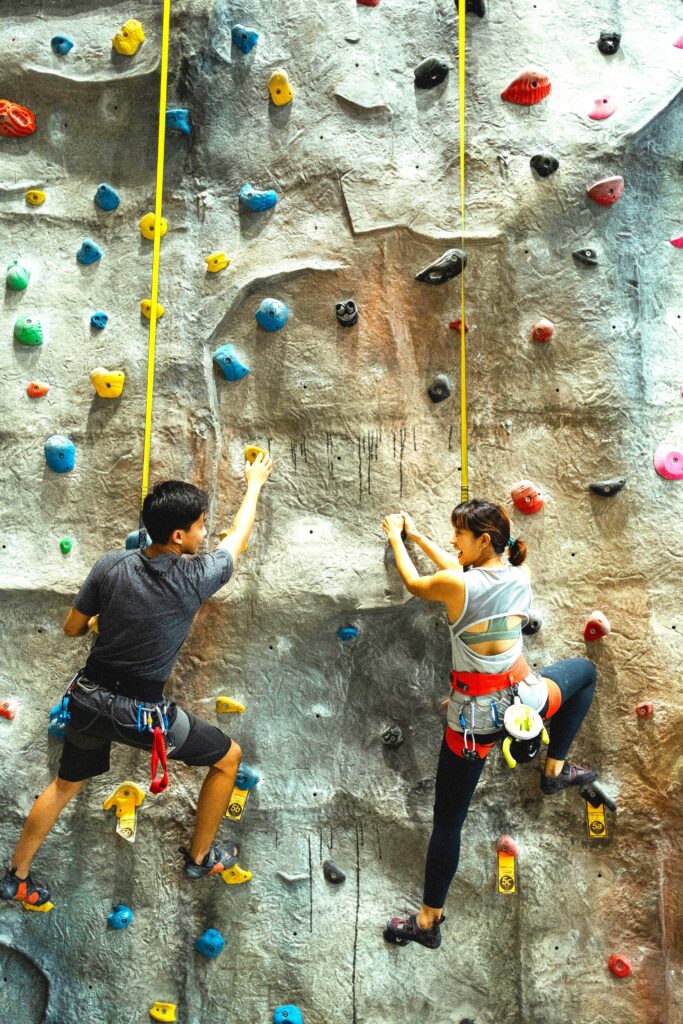
Give Indoor Climbing a Try
Rainy weekend? No problem.
Give indoor climbing a try. Many climbing gyms have beginner areas and introductory sessions, so you don’t need previous experience to get started.
This can be a great family activity because everyone can choose the challenge that feels right for them. One person might be comfortable tackling a higher route, while someone else prefers to start slow.
Climbing also gets kids thinking. You have to figure out where to place your hands and feet and decide which move to make next. Reaching the top can be a pretty big confidence boost too.
Before you go, check the gym’s age requirements and safety rules. If it is your family’s first visit, ask the staff about beginner sessions and the equipment you’ll need.
Cook a Meal From Scratch
Get the kids cooking, and make dinner fun!
Choose a recipe the whole family can make together. Homemade pizza is an easy choice because everyone can create their own. Tacos, pancakes, burgers, or pasta work well, too.
Give the kids real jobs instead of simply letting them watch. One can wash the vegetables. Another can measure ingredients. Older children can help with chopping if they’re comfortable and supervised.
The kitchen might end up a little messier than usual, and that’s fine! Part of the fun is sitting down afterward and eating something everyone had a hand in making.
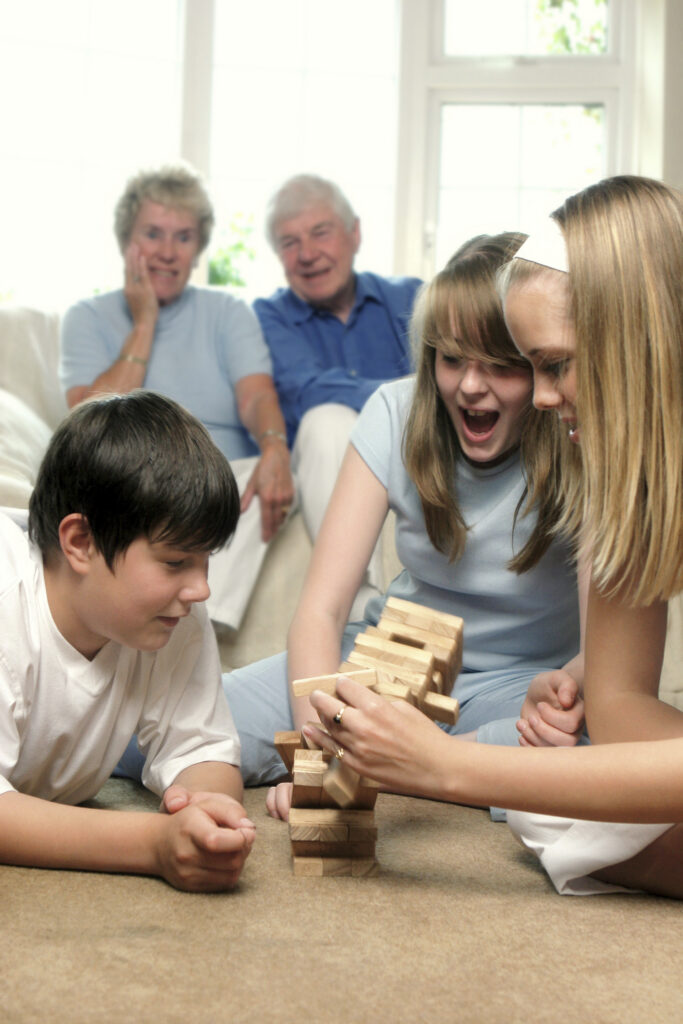
Play a Game
Most of us have a stack of board games in the house.
Pick a couple that everyone can play. If your children are different ages, let each child choose one. Simple card games, like Go Fish or War, can work well when attention spans are short.
Remember, it’s not all about winning. Games can get surprisingly competitive, so be sure to keep things light. Laugh at your own bad moves. Let the younger kids make up their own rules once in a while.
You may be surprised by how much fun you can have when nobody’s checking a phone every few minutes.
Make Something With Your Hands
Keeping the weekend screen-free gives you the perfect opportunity to do a small project.
Build a birdhouse. Paint an old piece of furniture. Make friendship bracelets. Put together a model. Plant flowers.
The project doesn’t need to be perfect when it is finished. In fact, the imperfect parts are usually what make it memorable.
Everyone can contribute something. Kids get a huge sense of accomplishment when they can point to something they made with their own two hands.
There’s no need to buy a lot of expensive craft supplies either. Use what you already have. Cardboard boxes, old magazines, paper bags, leftover wrapping paper, and a little imagination can go a long way.
Have a Picnic, Even at Home
Have a picnic at home or at your local park.
Pack sandwiches, fruit, snacks, and drinks, and grab a blanket to sit on. If the weather’s not cooperating, move into the living room, and have an indoor picnic instead.
Make it a rule that no phones are allowed. If you have older children, you can let them plan the menu and prepare some of the food.
Then talk. Tell silly stories. Ask the kids about something they’re interested in. You might hear answers you would never get during a rushed weekday dinner.
Explore Your Own Town
Most of us love to travel, but might not have spent much time seeing the sights of our own city. Why not take a day to be a tourist in your own town?
Check your city or county’s tourism website, or search “things to do in [your city]” — you’ll likely find a list of spots you’ve been meaning to check out for years but never have. Many local attractions also offer free or discounted admission days, so it’s worth a quick look before you go.
Visit a museum. Walk through a historic area. Stop at a farmers market. Check out a local bookstore. Find a new playground. Try a restaurant you haven’t visited before.
Ask each family member to pick one stop for the day. It keeps everyone invested, and you’ll end up seeing your town in a new light.
And you might just discover a new favorite spot that was right there the whole time.
Have an Art Afternoon
Put a large sheet of paper, an old bedsheet, or even a stack of paper plates on the table and let everyone create something. You don’t need fancy supplies — crayons, markers, or a basic set of paints from the dollar store work just fine.
It doesn’t matter whether anyone in the family thinks they’re good at drawing. The point is to make something without worrying about the result.
Try a few simple challenges to keep it interesting. Everyone draws the same object from a different angle. One person starts a picture and passes it to someone else to finish (a favorite in our family). You can even work on one large piece together and hang it up when it’s done.
This works well for younger kids who don’t need much direction to get started, but older kids and teens can get into it too, especially if you turn it into a friendly contest or theme the drawings around something silly, like “worst superhero” or “what our dog is probably thinking.”
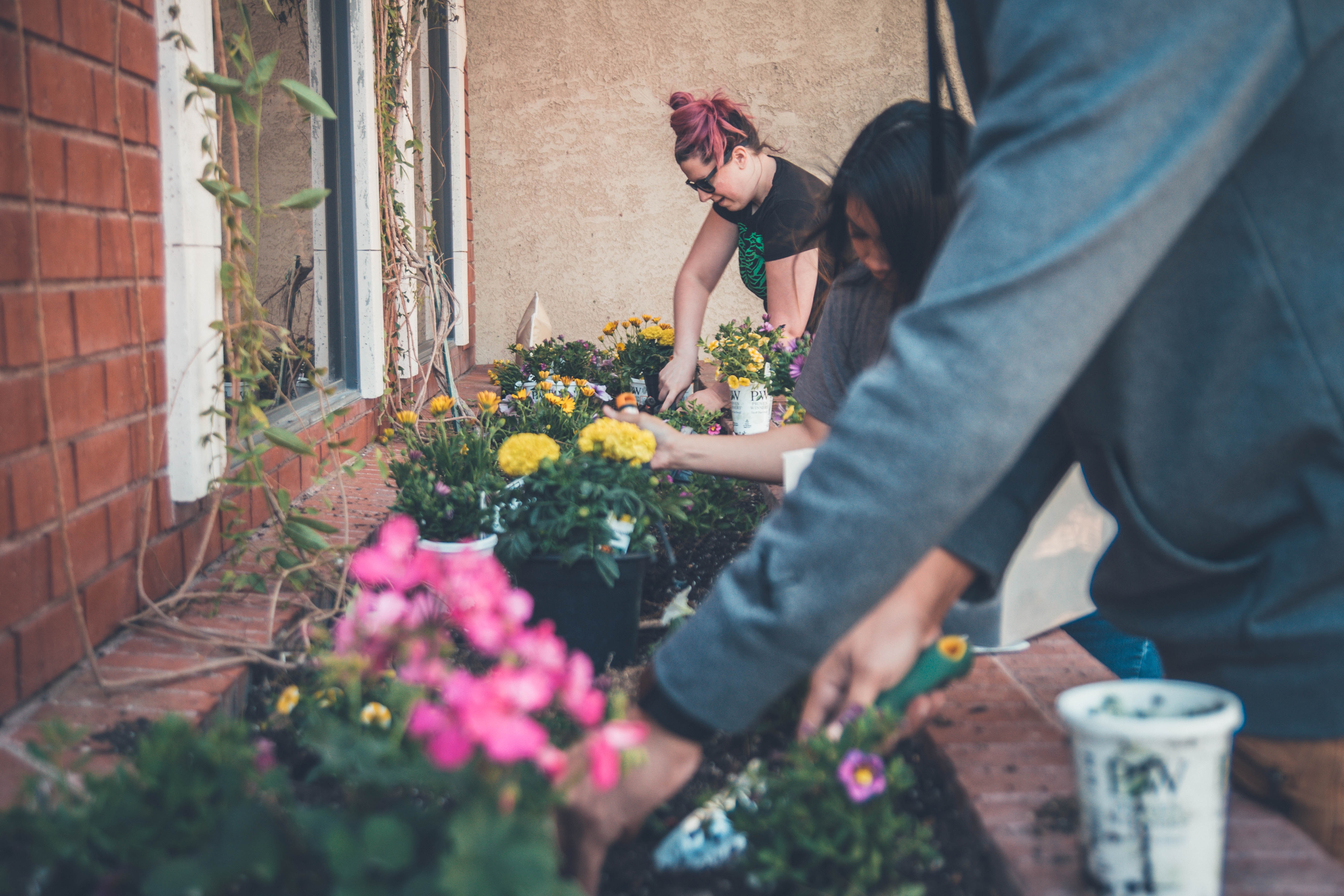
Volunteer
Not every family activity has to be about entertainment.
Spend a few hours doing something useful together. Clean up litter at a local park or trail. Sort through your home for unwanted clothes and toys to donate. Help an elderly neighbor with yard work or a small task around the house. Pack food boxes at a local food bank. Bake something and drop it off with a neighbor who could use a little extra kindness.
If you’re not sure where to start, check your local food bank, animal shelter, or church for family-friendly volunteer opportunities — many organizations welcome kids as young as five or six for age-appropriate tasks.
Children learn a lot from seeing adults give their time to help someone else, and it tends to stick with them longer than most planned activities do.
Leave Some Time Unplanned
This might be the hardest idea for a busy family. Do nothing for a while.
Kids don’t always need an organized activity. Give them some space, let them be bored, and see what happens. Maybe they’ll build a fort, start a kickball game, draw, read, or come up with something completely unexpected.
Parents need downtime, too. Your screen-free weekend shouldn’t become another project that needs to be managed. The point is just to create some breathing room and spend time together without constant digital distractions.
After your family’s digital detox you might find that the best moments weren’t the climbing gym or the day trip. It might have been making pancakes in the morning, playing a card game, or sitting outside after dinner.
Those ordinary moments are often the ones families remember the most.
Also read:
How to Set Healthy Social Media Boundaries for Teens
Making Childhood Memories Your Kids Will Cherish: 30 Simple Ideas + a Free Printable
You can find MomsWhoSave on Facebook, Instagram, Pinterest, and Twitter. Join us for updates!
Don’t miss a thing! Subscribe to MomsWhoSave’s newsletter.
Leave a Reply