Last updated on November 19th, 2026
Some of the best savings in my house come from buying in bulk. So have some of my worst grocery mistakes. Knowing what to buy in bulk, and what to skip, comes down to a little unit price math and an honest look at how your family really shops.
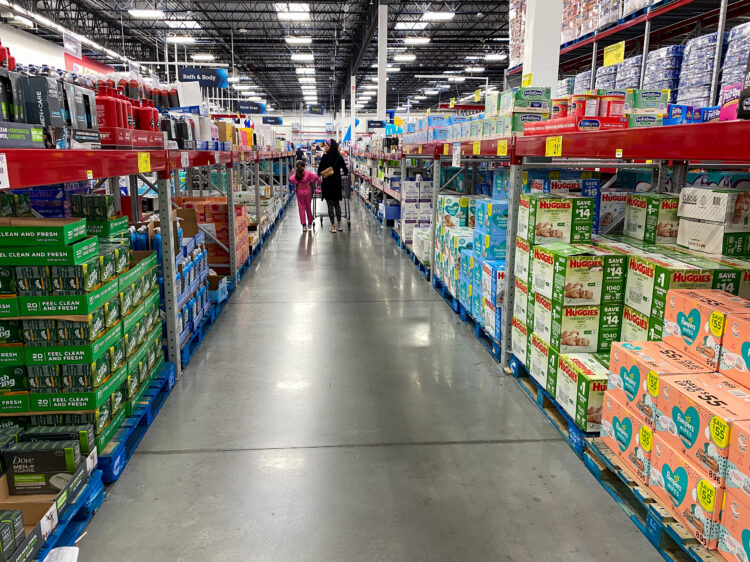
There’s something satisfying about hauling a giant package of anything out of the warehouse club. It feels like a win. But I’ve been doing this long enough to know that the biggest box isn’t always the cheapest, and a “deal” that never gets used isn’t a deal at all.
Buying in bulk can absolutely help your family budget. It just has to match how your household actually eats, cleans, and shops. Here’s how I decide what to buy in bulk and when to leave the jumbo pack on the shelf.
Bigger isn’t always a better deal
Most of us assume the bigger package costs less per ounce. Usually it does, but not always.
Stores sometimes charge more per unit for the larger size, and there’s actually a name for it: a quantity surcharge. It turns up on everyday items like canned tuna, peanut butter, and laundry detergent. It’s easy to miss because the big number on the shelf tag is the total price, not the unit price.
So in addition to asking, “Is this a good price?” ask, “Will we actually use all of this?” Answer that honestly and you’ll protect your grocery budget and your pantry space.
The five-question bulk-buying test
Before you fill your cart, run each potential bulk buy through this quick check.
- Will you actually use it? Stick to what your family already buys week after week. A bulk pack of something your family hasn’t tried yet is always a gamble, even at a great price. (I learned this one the hard way when I bought a big box of individual pretzel bags. We’d never had that brand, but I figured they’d make a great grab-and-go snack. It turns out nobody here likes them.)
- Will you finish it before it goes stale? Check the date on the package and be honest about how fast your family goes through it. Most dates are about peak quality, not safety, but stale cereal and crackers that taste like cardboard still end up in the trash.
- Do you have room to store it properly? Rice needs a dry, sealed container, and frozen food needs actual freezer space. If it has to be crammed into the coat closet, or you can’t store it safely, it isn’t a good deal for you.
- Is the unit price actually lower? Compare the same measure: price per ounce, per roll, or per diaper. Check your regular grocery store too, because the warehouse club doesn’t always win.
- Is it a real deal or does it just look like one? Picture the same quantity without the “value pack” banner over it. If you’d walk right past it, keep walking.
What to buy in bulk
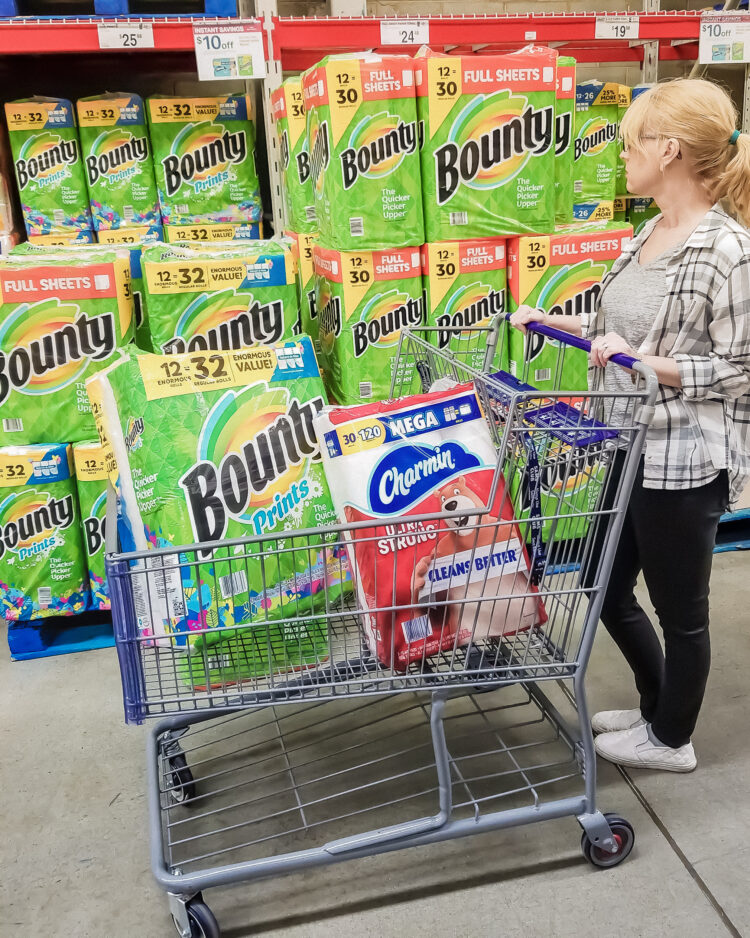
Paper products. Toilet paper and paper towels are my easiest bulk buys. Everyone in the house uses them, they don’t expire, and they keep fine as long as they stay dry. Compare the price per sheet if you can, since roll sizes vary a lot between brands. And make sure you have a spot for that giant pack before you buy it.
Pantry staples. Rice, pasta, oats, dried beans, and canned tomatoes are worth buying big if they’re already part of your regular meals. Foods that keep well, like whole grains, canned goods, and frozen vegetables, are where bulk buying really pays off. Food that’s likely to spoil before you get to it isn’t worth the bulk price.
Cleaning and laundry supplies. Detergent, dish soap, and everyday cleaners often cost less per load in larger containers, and they last a long time. Check the label for storage directions, and don’t stock up on a new brand until you know you like it.
What not to buy in bulk
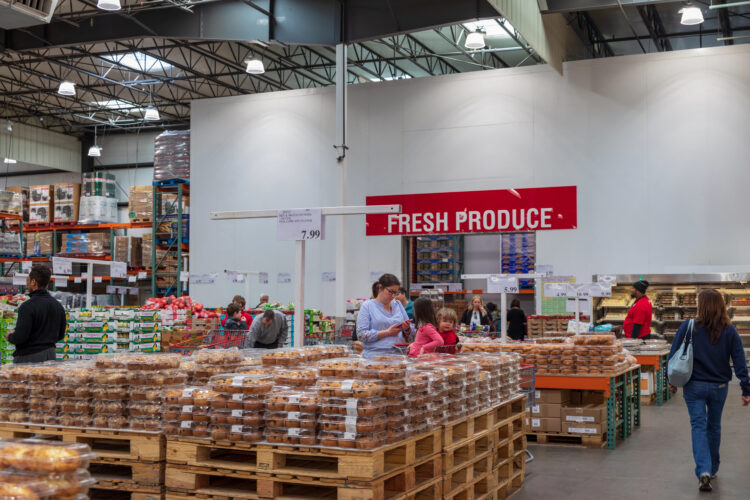
Perishables. A flat of berries or three loaves of bread isn’t a bargain if half of it goes moldy. The Environmental Protection Agency (EPA) estimates the average household of four throws away about $2,900 worth of food a year. That’s more than $50 a week! Bulk produce can still work if you have a plan for it, like a week of meals that use it up or freezing portions before they go bad.
Untested products. Buy the small size of any new food or skincare product first. Kids can love a snack on Monday and refuse it by Friday, and a “gentle” body wash can still leave sensitive skin red and itchy. A low unit price doesn’t help if nobody uses it.
Seasonal flavors and trendy snacks. Pumpkin spice everything is fun in October, but a case of it isn’t much fun in February. Save bulk buys for the things your family eats all year.
The right bulk buys depend on your household
The same bulk buy can be a smart move for one family and a waste for another.
Bigger families tend to get the most out of bulk buying. A family of six can get through a big bag of oranges, a case of yogurt, or a giant box of cereal before any of it goes bad.
Smaller households have to be pickier. My husband and I learned that two people can’t finish a big bag of apples before they go bad. We really adjusted our bulk buying as the kids started leaving home, but we still buy chicken in bulk, then portion it out and freeze it. Soap, paper towels, and toilet paper are bulk buys at our house too, because they last until we need them.
Storage and shopping habits matter too. A deep freezer or a roomy pantry makes stocking up a lot easier. If you shop every few days, you may not need to stock up much at all. If you only get to the store every couple of weeks, bulk buys can save you money and extra trips.
Life stage changes things as well. If you have a baby, bulk diapers and wipes can be a good deal once you know which brand fits and how many you go through. Babies size up fast, though, so don’t buy more than you’ll use before they move to the next size. Bigger baby essentials like car seats and strollers are a different story. You’re only buying one, so safety and how long it will fit your child matter far more than a flashy discount. (And once you’ve chosen a car seat, register it with the manufacturer so you’ll hear about any recalls, as the National Highway Traffic Safety Administration recommends.)
Before you stock up
Check the unit price first. If the bigger pack really is cheaper, ask yourself how much you’ll realistically use before it spoils, goes stale, or gets outgrown. And don’t forget membership fees and delivery charges, which can eat up the savings fast.
The goal is to spend less on what your family really uses, not to fill the pantry with stuff that ends up in the trash.
You might also like:
20 Things to Stop Buying at the Grocery Store (and What to Buy Instead)
Can You Freeze Fruits and Vegetables? Get the Freezer-Friendly List
What’s Your Savings Style? Take the Quiz
You can also find MomsWhoSave on Pinterest, Facebook, Instagram, and Twitter. Join us for updates.
Don’t miss a thing! Subscribe to MomsWhoSave’s newsletter.
Leave a Reply